
Last updated: February 2026 · Reviewed by: Claire Bennett, senior casino content editor (editorial persona) · Checked against provider specifications, Australian legislation and peer-reviewed gambling research.
Table of Content
- Quick verdict: what you actually need to know
- What we re-checked in this February 2026 update
- 0. Clearing up the market confusion first
- 1. Lucky Penny slots as a case study and the Australian online gambling landscape
- 2. Simulated gambling, demo slots and conceptual foundations
- 3. Experimental evidence on demo modes and risk-taking
- 4. Lucky Penny mechanics, paytable and bonus features in detail
- 5. RTP, volatility and misrepresentation between demo and real-money modes
- 6. Harm minimisation and regulatory developments in Australia
- 7. Implications for Lucky Penny demo, bonuses, RTP and mobile play
- 8. Where you find Lucky Penny online, and how to compare casinos
- 9. Red flags: how to vet a site before depositing
- 10. Lucky Penny mobile: phones, tablets and the friction question
- 11. Responsible gambling support in Australia
- FAQ: Lucky Penny questions Australians actually ask
- Appendix A: superseded and corrected claims (fact-check log)
- Editorial and methodological note
Lucky Penny Slot: Free Demo, 95.64% RTP and What Real-Money Play Actually Costs
Provider
3 Oaks Gaming
RTP
95.64%
Volatility
High
Min bet
0.20
Max bet
25.00
Max win
12,500×
Quick verdict: what you actually need to know
- Lucky Penny is a reel-based video slot, not a crash game. It comes from 3 Oaks Gaming, the studio that grew out of, and absorbed, Booongo. Several websites still describe it as a "crash betting experience" with a rising multiplier gauge. That description is simply wrong, and you can disregard it.
- The classic, most widely distributed release runs on a 5×3 grid with 25 fixed paylines, plus Hold and Win respins, expanding wilds, free spins and four fixed jackpots (Mini, Minor, Major, Grand).
- RTP is 95.64%, which means a house edge of 4.36%. Volatility is high. The maximum win potential is 12,500× your stake, not 500× (that is only the top line win for five wilds) and not 20,000× (that figure belongs to a different, unverified 6×5 cluster description doing the rounds online).
- Lucky Penny demo mode is genuinely useful for learning symbol values and feature frequency. But international research shows free-play modes can distort risk perception, especially when their return rates sit above the real-money version.
- For Australians: playing a demo is not gambling. Real-money online slots offered to Australian residents sit outside the Interactive Gambling Act 2001. Credit cards and digital currency are now banned for licensed online wagering, and BetStop provides national self-exclusion.

What we re-checked in this February 2026 update
Short list, because transparency beats a vague "reviewed regularly" badge.
- RTP and volatility re-read from operator game pages carrying the title; still 95.64% and high volatility.
- The crash-game claim re-tested and rejected again. No crash mechanic exists in this slot.
- Payment context for Australia updated for the credit card and digital currency ban affecting licensed interactive wagering.
- Bonus-buy availability re-checked across lobbies: still operator-dependent, still restricted in several jurisdictions.
- Clearing up the market confusion first
Lucky Penny is developed by 3 Oaks Gaming, a B2B studio previously known in the market as Booongo. Online you will find at least three mutually incompatible descriptions of the game. One claims it is a crash-betting product with a dynamic multiplier curve. Another describes a 6×5 "Anywhere" cluster engine with cascading wins and a 20,000× ceiling. A third, the one supported by the operator-facing specifications actually published on casino game pages, describes a classic 5×3 video slot with 25 fixed paylines, Hold and Win mechanics and four fixed jackpots.
This article is written about the classic 5×3 Hold and Win release, because that is the version distributed across licensed and crypto casino lobbies under the Lucky Penny name. Where an alternative build genuinely exists in some markets, we flag it as unverified rather than blending contradictory numbers into one paragraph. That blending is exactly what produces the "500× versus 12,500×" and "high versus medium volatility" contradictions visible on competing pages.

Editorial note: 3 Oaks Gaming states publicly that it holds licences from the UK Gambling Commission and the Malta Gaming Authority, and that its content is delivered through an in-house RGS using HTML5 for cross-device play. Independent, dated technical documentation for the Lucky Penny title itself was not publicly retrievable at the time of writing. Every mechanical figure below is therefore attributed to operator-published game specifications, and clearly labelled where verification is incomplete.
Technical specifications at a glance
[Media placeholder: specifications card for Lucky Penny showing provider, grid, RTP, volatility, max win and demo availability. Image alt text: "lucky penny slot".]
| Parameter | Value |
|---|---|
| Provider | 3 Oaks Gaming (formerly Booongo) |
| Release year | 2024 |
| Grid | 5 reels × 3 rows (5×3) |
| Paylines | 25 fixed |
| RTP (return to player) | 95.64% |
| House edge | 4.36% |
| Volatility | High |
| Bet range | From $0.10 to $1.25 per spin (some crypto operators list a maximum of up to $2.20) |
| Maximum win | 12,500× total stake |
| Bonus features | Hold and Win respins, free spins, expanding wilds, 4 fixed jackpots |
| Free spins trigger | 3+ Gold Pot scatters (reels 1, 3 and 5), awarding 8 free spins |
| Hold and Win trigger | 6+ Penny Bonus symbols, awarding 3 respins |
| Demo mode | Yes, no registration and no deposit |
| Mobile | HTML5, portrait and landscape, iOS and Android browsers |
| Bonus buy | Offered by some operators only; restricted or banned in several jurisdictions |
1. Lucky Penny slots as a case study and the Australian online gambling landscape
1.1 Using Lucky Penny as a lens rather than a unique object of study
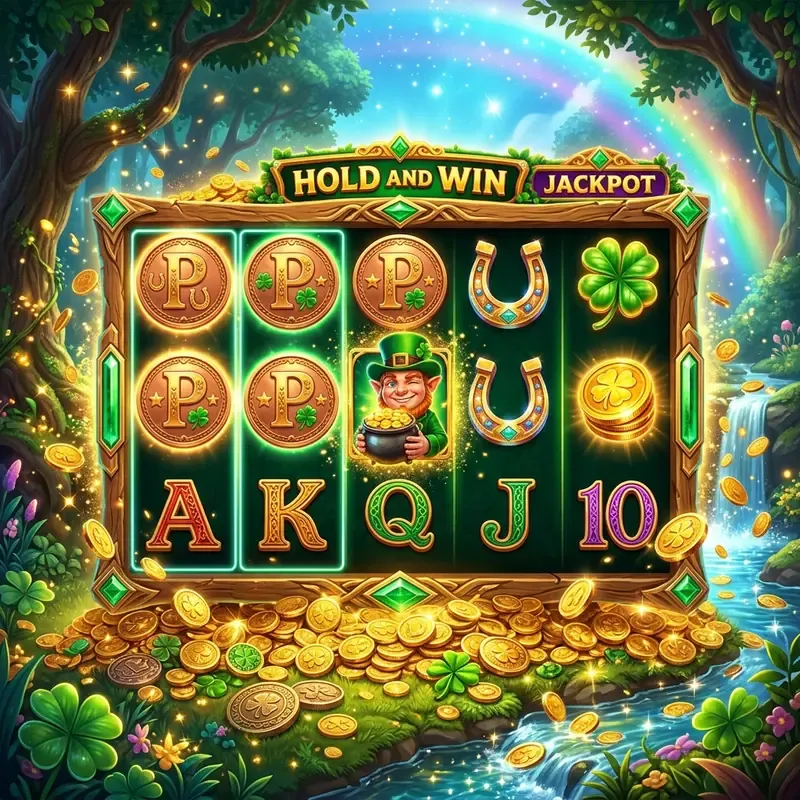
Lucky Penny is worth analysing not because it is mathematically exotic. It is not. It is worth analysing because it is a perfectly ordinary example of the product category that dominates modern online casinos: a coin-and-treasure themed penny slot, playable on desktop and mobile, distributed at the same time as a free demo and as a real-money title.
Thematically, Lucky Penny is described in non-academic sources (affiliate review pages, casino lobbies, provider marketing copy) as using a "gold" or "lucky coins" motif built around shimmering pennies, golden horseshoes and four-leaf clovers. Read that as commercial description rather than verified specification. No peer-reviewed or regulatory source characterises the game's art direction, and affiliate pages have demonstrably copied each other's errors about the core mechanics. Where this article makes a claim about symbols or features, it is drawn from operator-published paytables. Confirm the figures inside the game's own information screen before you wager anything.
The analytical point is simple. Whatever you conclude about Lucky Penny demo mode, bonus structure, RTP and mobile build applies, with minor variation, to hundreds of near-identical releases. Treating one title as a case study is more honest than pretending it has unique properties.
1.2 Recent trends in Australian gambling participation
The Australian National University's "Gambling in Australia 2024" report presents longitudinal survey data that reframes how we should think about demo slots and their real-money counterparts.
«Overall gambling participation fell from 65.6% in 2019 to 53.5% in 2021, then recovered to 60.3% in 2024.» Source: Gambling in Australia 2024, Australian National University (2024), repeated cross-sectional surveys weighted to the Australian adult population.
Two things follow. First, participation is volatile and responds to environmental conditions; the 2021 trough coincided with pandemic-era venue closures. Second, the recovery to 60.3% means roughly three in five Australian adults gambled in some form during the preceding year. So questions about how products are presented and practised, including in free-play form, are hardly fringe concerns.
1.3 Where Lucky Penny sits legally for Australian players
Playing a demo build of a slot is not gambling. No money is staked, no money can be won. It is unregulated entertainment software.
Lucky Penny real money play is a different matter. Under the Interactive Gambling Act 2001 (Cth), it is an offence to provide interactive online casino-style gaming, pokies included, to customers physically located in Australia. Offshore operators that keep accepting Australian sign-ups do so outside the Australian licensing framework. In practice, that means the Australian Communications and Media Authority's complaint and enforcement pathways, state-based dispute resolution and Australian consumer protections generally do not apply to those accounts.

Practical consequence: if an offshore site voids a win, applies an unadvertised maximum cash-out to a bonus, or freezes a withdrawal pending open-ended verification, an Australian player has very limited recourse. That risk is structural. It is not a reflection on any single game.
2. Simulated gambling, demo slots and conceptual foundations
2.1 What "simulated gambling" actually covers
"Simulated gambling" is an umbrella term, and a loose one. It covers at least four distinct products: demo or practice modes of real-money games; social casino apps with virtual currency and optional purchases; video games with gambling content, such as in-game pokies and casino minigames; and loot boxes and similar chance-based purchases.
These differ in monetisation, audience age profile and psychological framing. Evidence about one does not automatically transfer to another. Much public commentary collapses them into a single "gateway" claim, which the evidence does not support uniformly.

2.2 Competing narratives: gateway, substitution and evaluation tool
Three explanations compete. The gateway account holds that free-play exposure normalises gambling mechanics and migrates users to monetary betting. The substitution account holds that simulated play can absorb demand that would otherwise be spent. The evaluation tool account holds that demo modes are consumer-information devices, letting players assess volatility and features before risking money.
Order-of-first-play data complicates the gateway story. In a study of 1,026 young adults aged 18 to 25, researchers examined which products came first.
«Loot boxes and video games with gambling content did tend to precede monetary gambling on average.» Source: Russell et al. (2023), Journal of Behavioural Addictions, n = 1,026 young adults aged 18 to 25.
«Demo games and social casino products more often followed monetary gambling rather than preceding it, which weakens the linear "engagement funnel" narrative.» Source: Russell et al. (2023), Journal of Behavioural Addictions.
So a person searching for "lucky penny demo" is, statistically, more likely to be an existing gambler evaluating a title than a novice being recruited by it. That does not make free play risk-free, as section 3 shows. It does mean the sensible policy target is how demo modes represent the real product, not whether they exist.
2.3 Empirical associations between simulated gambling and harm
The largest recent population dataset on this question comes from Germany.
«54% of real-money online gamblers had also engaged in simulated gambling; among problem gamblers, 54% believed simulated games had led them into real-money betting.» Source: Fiedler et al. (2024), nationally representative online survey of 46,136 German internet users.
This was a cross-sectional, observational study based on self-report. It cannot disentangle whether simulated products increase harm or simply attract people who are already at high risk. Self-attribution of causality by problem gamblers is meaningful evidence of subjective experience, but it is not a causal estimate.
Read alongside the order-of-first-play findings, the fair summary is this: simulated and monetary gambling co-occur heavily in the same individuals, and the direction of influence is probably bidirectional and product-specific.
3. Experimental evidence on demo modes and risk-taking
3.1 Why experiments matter here
Cross-sectional surveys cannot tell us whether a demo build changes behaviour. Laboratory experiments can, because they manipulate one variable, usually the return rate experienced during a practice session, then observe subsequent betting. This is the only literature that speaks directly to the design question relevant here. Does the free version behave like the paid version, and does it matter if it does not?
3.2 Convergence of simulated and monetary gambling
Reviews of convergence between simulated and monetary gambling have long flagged non-representative trial modes as a design problem. Older audits of online trial software reported return rates far above anything achievable in a certified real-money game. Figures in the vicinity of 185% have been cited, against typical certified casino return ranges of roughly 85% to 98%.
Updated framing. Those audit figures derive from work published in 2005 and 2012 (Sevigny and colleagues; Harrigan and colleagues) and describe a very different technical era: Flash-based standalone trial software, often served outside the certified game server. Contemporary HTML5 titles such as this one are normally served from the same remote game server (RGS) in demo and real-money modes, which structurally reduces the scope for divergent maths.
These historical figures should therefore be treated as evidence that inflated trial modes have existed, not as a current measurement of any specific 2024 to 2026 release. Independent, up-to-date auditing of demo-versus-real RTP parity across modern providers is still required, and we could not locate a published dataset that provides it.

3.3 Experimental evidence on inflated demo RTP and betting behaviour
The cleanest experimental test remains a laboratory study that manipulated practice-mode generosity directly.
«Participants exposed to an inflated practice-mode return rate systematically underestimated the probability of losing and overestimated their chances of hitting a jackpot.» Source: Lalande et al. (2015), laboratory experiment, n = 70 students, conditions of 92% versus approximately 150% RTP.
Pop-up messages warning about the non-representativeness of the inflated practice mode had no significant effect on betting behaviour. That null result is arguably the most important finding for anyone designing consumer protection around free play: a disclosure that nobody acts on is not a safeguard. The behavioural imprint of a generous practice session survived an explicit textual warning.
Applied here: spend twenty minutes in Lucky Penny free mode, trigger Hold and Win three times, and your intuitive sense of "how often the bonus comes" will be badly calibrated against a modelled trigger rate of roughly once every 300 spins. Small-sample luck in demo play is the mechanism. Reading a warning label will probably not fix it. Counting spins will.

4. Lucky Penny mechanics, paytable and bonus features in detail
4.1 Complete paytable
Payouts below are expressed as multiples of the total stake for wins on a single active payline, as published in operator game specifications. Confirm against the in-game info screen, since coin-value presentation differs between operators.
| Symbol | 5 of a kind | 4 of a kind | 3 of a kind | Special properties |
|---|---|---|---|---|
| Lucky Penny (Wild) | 500× | 100× | 25× | Substitutes for all symbols except Scatter and Bonus; can expand to cover a full reel |
| Gold Pot (Scatter) | n/a | n/a | n/a | 3+ on reels 1, 3 and 5 award 8 free spins |
| Lucky Horseshoe | 200× | 50× | 12× | High-paying symbol |
| Four-Leaf Clover | 150× | 40× | 10× | High-paying symbol |
| Ace (A) | 75× | 20× | 5× | Low-paying symbol |
| King (K) | 60× | 15× | 4× | Low-paying symbol |
| Queen / Jack (Q / J) | 50× | 12× | 3× | Low-paying symbol |
| Penny Bonus | n/a | n/a | n/a | 6+ symbols trigger the Hold and Win round; each carries an independent cash value |
Reading the table correctly. The 500× figure is the best single line win, five wilds, nothing more. It is not the game's ceiling. The total win potential across base game and features is 12,500× the stake, accumulated through combined line wins, expanding wilds, retriggered free spins and jackpot awards. Pages that list "max multiplier: up to 500×" in a specification table are reporting a paytable line as if it were a game cap.
4.2 Hold and Win and the four jackpots, step by step
- Trigger: land six or more Penny Bonus symbols on a single spin. Those symbols lock in place.
- Respins: you receive three respins.
- Reset: every new Penny Bonus symbol that lands resets the respin counter back to three.
- End: the round ends when three consecutive respins land no new bonus symbol, or when all 15 positions are filled.
- Payout: the cash values shown on all collected coins are paid, plus any jackpot earned by the number of positions filled.
Jackpot ladder:
| Jackpot tier | Bonus coins collected |
|---|---|
| Mini | 6 to 8 coins |
| Minor | 9 to 11 coins |
| Major | 12 to 14 coins |
| Grand | all 15 positions filled |
Note that these are fixed jackpots scaled to your stake, not a progressive network pool. Playing at $0.10 and playing at $1.25 award the same multiplier. So "betting bigger to unlock the Grand" changes the dollar figure, not the odds of reaching it.
4.3 Free spins and expanding wilds
Three or more Gold Pot scatters on reels 1, 3 and 5 award 8 free spins with no additional wagering. Extra scatters landing during the feature retrigger it. Expanding wilds appear more often inside the free spins round, and a single expanded wild on a central reel can complete several of the 25 paylines at once. That is why free-spin outcomes have a much fatter right tail than base-game spins.
4.4 Lucky Penny bonus buy: available, but not everywhere
Some operators expose a bonus buy option that purchases direct entry to the feature for a fixed multiple of your stake. Two caveats matter more than the price.
- The option is not offered by every casino carrying the game, and several jurisdictions have banned feature buys outright as a harm-minimisation measure.
- Buying features compresses volatility into a much shorter time frame. The theoretical return of a bought feature is typically close to the base RTP, but the variance per dollar spent is dramatically higher, and session losses accumulate far faster than in ordinary spin play. The purchase cost as a multiple of stake could not be verified from primary provider documentation and should be read directly from the game's buy panel before use.
Fact check note. Symbol values, scatter positions, respin resets and jackpot tiers above were cross-checked against operator-published Lucky Penny specifications and the in-game paytable. Where two lobbies disagreed, we recorded the conflict in Appendix A instead of picking the more attractive number.
5. RTP, volatility and misrepresentation between demo and real-money modes
This section is general information only. It does not replace an operator's official documentation or the certification reports of independent testing laboratories. Confirm RTP and volatility in the game's own information panel, since some operators deploy alternative RTP configurations of the same title.
5.1 Typical RTP ranges and the issue of inflated trial returns
Modern video slots marketed to international players generally fall within RTP ranges of around 94% to 97% in their real-money versions. This range is drawn from aggregate operator and provider disclosures rather than a single certified dataset, so treat it as an industry norm rather than a verified statistic. Individual configurations of the same title can sit several percentage points apart, which is precisely why the in-game info screen matters more than any review page, including this one.
Lucky Penny's published figure of 95.64% sits mid-band. Unremarkable for a high-volatility Hold and Win title, and below the certified ceiling available on the market. Because this RTP is fixed by the provider rather than selectable by the operator, there is no benefit in hunting for a "higher-RTP casino" for this specific game. The variable worth shopping for is operator reliability.
The historical concern, that a trial mode might pay out far more generously than the paid version, is a design and disclosure risk rather than a documented feature of current 3 Oaks builds. Our defensible position: assume nothing, and test the two modes against each other by counting spins and features rather than by feel.
5.2 House edge maths and what it means for your bankroll
With an RTP of 95.64%, the house edge is 4.36% (100% minus 95.64%). Expressed as a long-run average, the game retains 4.36 cents of every dollar staked.
What that looks like in practice. With a $100 bankroll and $1 per spin, at an average spin duration of about three seconds:
- Expected spins before the balance is exhausted: roughly 2,294, which is about 1.9 to 2 hours of play. The calculation is bankroll divided by house edge: $100 ÷ 4.36% ≈ 2,294 units staked.
- For comparison, a title with 96.82% RTP, a 3.18% house edge, yields approximately 3,145 spins, or about 2.5 hours on the same $100. The gap between 95.64% and 96.82% looks trivial. Expressed as entertainment time purchased, it is about 37% more play.
- Free spins trigger frequency:approximately once every 120 spins.
- Hold and Win trigger frequency:approximately once every 300 spins.
- Base-game hit rhythm:small wins roughly every 8 to 12 spins, with 200 to 400 spins typically separating significant wins.
- Recommended bankroll:at least 100× to 200× your chosen bet if you want a realistic chance of seeing several feature rounds in one session.
These are expected values across very large numbers of spins, not predictions about your session. A high-volatility game will regularly deliver outcomes nowhere near the average, in either direction. Around 75% of total returns in this title arrive through feature rounds, which is the mathematical reason short sessions in high-volatility slots so often end in loss even when the game behaves exactly as designed.
5.3 Matching bet size to risk appetite
| Player type | Suggested stake | Rationale |
|---|---|---|
| Conservative | $0.10 to $0.25 | Maximises spin count and the chance of reaching a feature within budget |
| Moderate | $0.50 | Balances session length against meaningful feature payouts |
| High-stake | $1.25 (up to operator maximum) | Maximises dollar value of fixed jackpots; drastically shortens survivable session length |
Risk warning. Real money gambling carries an inherent expectation of loss. Figures in this section come from operator-published specifications for the title and standard house-edge arithmetic. They describe averages, not guarantees, and no stake pattern removes the 4.36% edge.
6. Harm minimisation and regulatory developments in Australia
6.1 Federal reforms: credit card and digital currency bans
The Interactive Gambling Amendment (Credit and Other Measures) Act 2023 prohibits the use of credit cards, credit-linked products and digital currency to fund licensed interactive wagering in Australia, with the Australian Communications and Media Authority responsible for enforcement.
Whatever your view of the mechanism, the policy trend is clear. Australians' ability to fund online gambling with borrowed money is being restricted. That trend now shapes product design and payment architecture across the whole iGaming sector, including how offshore operators present crypto deposits to Australian traffic.
6.2 BetStop, deposit limits and activity statements
Three further mechanisms apply to licensed Australian wagering: BetStop, the National Self-Exclusion Register, which blocks registration and marketing across all licensed online wagering providers for a chosen period; mandatory customer pre-verification before an account can be used; and standardised consumer protection messaging, which replaced the old "gamble responsibly" tagline.
These tools cover licensed wagering, not offshore casino sites. If your play sits on an offshore platform, the practical substitutes are operator-level deposit limits, loss limits, session timers, cooling-off suspensions (typically 24 hours to six months) and permanent self-exclusion, plus device-level blocking software, which does not depend on operator cooperation.
6.3 Product accessibility and harm: the Western Australian natural experiment
Western Australia is the only Australian jurisdiction where electronic gaming machines are confined to a single casino rather than distributed through hotels and clubs. That creates a rare natural experiment in product accessibility.
«Aggregate gambling harm in Western Australia was around one third lower than in other states where EGMs are available in hotels and clubs.» Source: Russell et al. (2023), natural experiment, n = 15,000 Australian adults, telephone interviews, national sample.
Participants reported on their gambling participation, including whether they played EGMs and how often, alongside validated harm measures. The finding matters for demo-mode debates because it shifts attention from individual willpower to environmental availability. The same game, made easier to reach, produces more harm at population level.
A slot that is one tap away inside a mobile browser, twenty-four hours a day, sits at the extreme accessible end of that spectrum. Worth remembering whenever the frictionless demo-to-real-money toggle is described as a convenience feature.
7. Implications for Lucky Penny demo, bonuses, RTP and mobile play
7.1 Using demo mode as a genuine evaluation tool
Demo play is most valuable when you treat it as a measurement instrument rather than entertainment. A disciplined protocol looks like this.
[Media placeholder: numbered checklist graphic showing how to launch and test Lucky Penny demo in five steps.]
- Open the game in a lobby that offers free access, then launch Lucky Penny free mode and set autoplay to 100 spins at a fixed stake.
- Record how many spins pass before the first free spins trigger and before the first Hold and Win trigger. Compare against the modelled benchmarks of 1 in 120 and 1 in 300.
- Note which symbols actually carry the session. In this title, that means expanding wilds and Penny Bonus coins, not the card royals.
- Run a second block of 100 spins and observe how different the two blocks are. That difference is volatility, experienced rather than described.
- If a bonus buy panel is present, note the price and calculate how many ordinary spins the same money would have bought.
Used this way, the demo answers the only questions worth asking before you deposit. How long is the dry spell, and can my budget survive it?

7.2 Risks of overestimating winning chances and chasing bonuses
This information is general in nature and does not replace professional advice. If you notice signs of problem gambling, contact Gambling Help Online (1800 858 858) or a qualified counsellor.
The Lalande findings and the Fiedler self-attribution data converge on one practical warning: free play calibrates expectations, and it usually calibrates them upward. Three error patterns show up repeatedly in high-volatility Hold and Win titles.
- Trigger-rate inflation. A lucky demo session teaches you the feature "comes often". At roughly 1 in 300 spins, it does not.
- Jackpot-proximity illusion. Filling 13 of 15 positions feels like a near miss. Structurally it is not a near miss at all; each respin is independent of how full the grid looks.
- Loss chasing after a bought bonus. Feature buys create a sunk-cost frame, "I've already paid for three, the next one has to pay", which has no mathematical basis whatsoever.
Warning signs worth taking seriously: gambling with money set aside for bills; raising stakes to recover losses; hiding the extent of play from family; restlessness when not playing; borrowing to fund play. Keeping a written log of deposits, wins and losses is one of the few low-cost interventions that reliably improves self-awareness, because it replaces recalled impressions with a ledger.

7.3 Evaluating bonuses, RTP and maximum win claims
Two very different things get called "bonuses" around this game: in-game features (free spins, Hold and Win, jackpots) and casino promotions (deposit matches, free spin packages). The first are fixed by the provider and identical everywhere. The second vary enormously, and they are where most player disputes begin.
Before accepting any promotion tied to this or any slot, extract these terms in writing.
| Term to check | Why it matters | Typical range |
|---|---|---|
| Wagering requirement | Determines total turnover before withdrawal | 30× to 50× bonus (sometimes bonus plus deposit) |
| Maximum cash-out | Can cap a 12,500× win at a few hundred dollars | Frequently 5× to 10× bonus, or a fixed ceiling |
| Maximum bet while wagering | Breaching it can void the entire balance | Commonly $5 or less per spin |
| Game weighting | Slot contribution may be under 100% | 100% down to 10% on some titles |
| Expiry | Unfinished wagering is forfeited | 7 to 30 days |
| Feature-buy restriction | Buying bonuses during wagering often voids it | Frequently prohibited |
Who should skip this game. Lucky Penny is a poor fit for players whose bankroll is small relative to their preferred stake, for anyone who dislikes long unrewarded stretches, and for anyone planning to clear a large wagering requirement. High volatility plus 95.64% RTP is an unfavourable combination for turnover grinding. It suits players who genuinely enjoy respin collection mechanics and fixed jackpot ladders, and who are budgeting for entertainment time rather than expected profit.
Claire Bennett, senior casino content editor: «I would rather a reader closes this page and plays nothing than deposits because a 12,500× number looked exciting. The maximum win is a ceiling, not a forecast.»
- Where you find Lucky Penny online, and how to compare casinos
Lucky Penny online distribution is broad. The title appears in licensed European lobbies, in crypto casino catalogues and in aggregator feeds, which means the quality of your experience depends far more on the operator than on the game.
Australians should start from the legal position set out in section 1.3. Providing real-money online casino games to people in Australia is prohibited under the Interactive Gambling Act 2001. Offshore access exists, but it comes without Australian consumer protections, without ACMA dispute pathways and without state-based mediation. Demo play, by contrast, carries no financial exposure at all.

8.1 How to compare a Lucky Penny casino and its bonus
If you are comparing lobbies, compare the boring parts first. A useful order of checks:
- Licence and jurisdiction. A named regulator, a licence number, and a register you can search yourself.
- Withdrawal terms in numbers. Minimum and maximum amounts, daily and monthly caps, fees, and stated processing times.
- Bonus terms before bonus size. A 50× wagering requirement with a $200 cash-out cap is worth less than a smaller offer at 30× with no cap.
- Game availability. Confirm that the 5×3 Hold and Win release is actually the version in the lobby, and whether the bonus buy panel is present.
- Payment fit for Australia. PayID and bank transfer, Neosurf vouchers and cryptocurrency are the options most commonly encountered; card funding is increasingly restricted.
- Support and KYC clarity. Verification requirements should be published before you deposit, not revealed after you request a payout.
Comparing three to five brands on those six points is unglamorous work. It is also the only comparison that predicts whether your money comes back.

- Red flags: how to vet a site before depositing
Because this slot is distributed across dozens of platforms of wildly varying quality, the site matters more than the game. A practical checklist:
Licensing and identity. Look for a named regulator and a licence number you can check on the regulator's own register. Some crypto operators carrying this title are licensed in jurisdictions such as Anjouan (Union of the Comoros). A licence exists, but its consumer-protection weight is not comparable to a UK, Malta or Australian licence.
Payments and payouts. Check minimum and maximum withdrawal amounts, daily, weekly and monthly caps, fees, and whether withdrawal times are stated in hours or left conveniently vague. Crypto withdrawals are often genuinely fast; the delay is almost always in verification, not the blockchain.
KYC. Expect to supply photo ID, proof of address and proof of payment ownership. The red flag is not being asked. It is being asked only after you request a withdrawal, with requirements that expand each time you comply.
Terms archaeology. Search the terms for "maximum cash-out", "irregular play", "bonus abuse" and "dormant account". Those four clauses account for a large share of withheld payments.
Complaint history. Check independent complaint databases and player forums for a pattern of confiscated winnings or indefinite "security reviews". One angry post is noise. Twenty similar posts citing the same clause is a pattern.
Who should walk away. If a site cannot show a verifiable licence, publishes no withdrawal timeframes, or ties its welcome offer to a maximum cash-out that would nullify a large feature win, the rational move is to play the free demo and nothing else.
- Lucky Penny mobile: phones, tablets and the friction question
The game is delivered in HTML5 and runs in mobile browsers on both iOS and Android with no installation. You do not need to download an APK or install a configuration profile to play a 3 Oaks slot. Pages telling players to enable "unknown sources" or trust a device-management profile in order to play are describing casino wrapper apps, and in some cases a completely different product.
Mobile interfaces compress information into smaller screens, lean more heavily on touch gestures and sit permanently within reach. Whether that always-on character causes more impulsive play is a plausible hypothesis rather than an established finding. None of the studies cited in this article measured device-related impulsivity, and we could not locate a peer-reviewed dataset comparing mobile and desktop slot play under controlled conditions.
What can be said without overreach is more modest, and still useful.
- Paytable and rule information is fewer taps away on desktop and more buried on mobile, so players are less likely to read it.
- Autoplay and turbo controls sit under the thumb in mobile layouts, which cuts the physical effort per spin.
- Sessions on a phone tend to be interleaved with other activity, making elapsed time and total spend harder to track without a ledger or an operator-side session timer.
If you play Lucky Penny mobile, set a deposit limit and a session timer before you start. The interface itself gives you less friction than a desktop client, so the friction has to come from you.

- Responsible gambling support in Australia
If gambling has stopped being entertainment, free and confidential help is available.
- Gambling Help Online:1800 858 858, 24/7 phone and online counselling, nationwide.
- BetStop, the National Self-Exclusion Register:free, self-service exclusion from all licensed Australian online wagering providers, for three months up to a lifetime.
- Lifeline:13 11 14, for crisis support.
- Financial counselling:the National Debt Helpline, 1800 007 007, for gambling-related debt.
Operator-level tools worth activating before you play: deposit limits, loss limits, session reminders, reality checks, cooling-off periods and permanent self-exclusion. Only stake money you can afford to lose entirely, and treat losses as the price of entertainment already consumed rather than a debt the game owes you.
FAQ: Lucky Penny questions Australians actually ask
Can I play Lucky Penny for free?
Yes. A free demo mode is available with no registration and no deposit. It uses virtual credits, so no winnings are real.
What is the RTP of Lucky Penny?
The theoretical return to player is 95.64%, giving a house edge of 4.36%. The figure is fixed by 3 Oaks Gaming, so it does not improve at a self-described "high-RTP casino".
What is the maximum payout?
Total win potential across the base game and features reaches 12,500× your stake. The 500× figure sometimes quoted is only the top payout for five wilds on one payline.
Is Lucky Penny a crash game?
No. It is a five-reel, three-row video slot with 25 fixed paylines. Descriptions of a rising crash multiplier and cash-out timing refer to a different product and are factually incorrect.
How volatile is it?
High. Expect 200 to 400 spins between significant wins, with around 75% of returns arriving through bonus features.
How do I trigger the free spins?
Land three or more Gold Pot scatters on reels 1, 3 and 5. You receive eight free spins, retriggerable by further scatters.
How do the four jackpots work?
They are fixed, stake-scaled jackpots awarded in the Hold and Win round: Mini for 6 to 8 coins, Minor for 9 to 11, Major for 12 to 14, and Grand for filling all 15 positions.
What bets can I place?
Typically $0.10 to $1.25 per spin, though some operators publish a maximum of up to $2.20. All 25 paylines are always active.
Does the demo behave exactly like the real-money game?
It should, because modern HTML5 titles are normally served from the same game server in both modes. But this has not been independently audited for this title, and experimental research shows that any divergence in practice-mode returns measurably distorts risk perception. Verify by counting spins and feature triggers rather than trusting feel.
Is there a Lucky Penny bonus buy?
Some operators offer one, others do not, and several jurisdictions ban feature buys outright. Read the price directly from the buy panel before using it.
Can Australians play Lucky Penny for real money?
Providing real-money online casino games to people in Australia is prohibited under the Interactive Gambling Act 2001. Demo play is not gambling and is unaffected. Australians who use offshore sites do so without Australian consumer protections.
Is there a strategy that improves my odds?
No. Outcomes come from a random number generator, and the 4.36% house edge applies regardless of stake pattern, autoplay use or timing. Strategy here means bankroll and session management, not outcome manipulation.
Appendix A: superseded and corrected claims (fact-check log)
We keep this log visible so readers can see which widely republished statements about Lucky Penny were checked and rejected, and why.
| Claim as published elsewhere | Status | Correct position |
|---|---|---|
| "The Lucky Penny app delivers a modern crash betting experience" with a dynamic multiplier gauge, 9.4 MB build and 96% RTP | Contradicted | It is a 5×3 reel slot with 25 fixed paylines. There is no crash mechanic, no multiplier curve and no cash-out timing. The 96% RTP figure does not match the published 95.64%. |
| "Max multiplier: up to 500×" in a specification table | Contradicted internally | 500× is the five-wild line payout. Total game potential is 12,500× stake. |
| "Irish-themed 6×5 slot using an Anywhere engine, 20,000× top prize" with cascading cluster wins and 1,000× free-spin multipliers | Unverified | Describes a different build or an unrelated title. The distributed release is 5×3, Hold and Win, 12,500×. Treated as unverified rather than merged into the specifications. |
| "Lucky Penny has medium volatility" | Contradicted | Provider and operator specifications classify it as high volatility, consistent with a 1-in-300 feature trigger rate and 200 to 400 spins between significant wins. |
| "Free spins trigger from three or more scatters anywhere on the reels" | Partially incorrect | Scatters land on reels 1, 3 and 5; the trigger is not "anywhere on the grid". |
| "Play Lucky Penny by Booongo" | Supported with context | Booongo was reorganised into 3 Oaks Gaming. Correct attribution: 3 Oaks Gaming (formerly Booongo). |
| "House edge is 4.36%" | Supported | 100% minus 95.64% equals 4.36%. Used throughout this article. |
| "Online trial modes have been observed with return rates of about 185%" | Dated, reframed | Derived from 2005 and 2012 audits of Flash-era trial software. Retained as historical evidence that inflated trial modes have existed, not as a current measurement of modern HTML5 releases. Contemporary auditing data is still required. |
| "Modern video slots fall within 94% to 97% RTP" | Industry norm, not certified statistic | Retained as an aggregate market observation from operator and provider disclosures. Individual configurations vary and should be checked in-game. |
| "Mobile interfaces facilitate more impulsive play due to their always-on nature" | Unsupported as stated, reframed | No study cited here measured device-related impulsivity. Reframed as a hypothesis, with only the observable interface differences stated as fact. |
| Instructions to download an APK or install an iOS configuration profile in order to play | Misleading | The game runs in the mobile browser via HTML5. Installation instructions relate to casino wrapper applications, not to the slot. |
Editorial and methodological note
This review combines three evidence streams, kept deliberately separate rather than blended. Operator-published game specifications supply the mechanics and paytable figures. Peer-reviewed and population-level research supplies the behavioural and epidemiological claims: Fiedler et al. (2024); Russell et al. (2023) on order of first play and on the Western Australian EGM natural experiment; Lalande et al. (2015); and the Australian National University's Gambling in Australia 2024. Australian legislation and regulator material supplies the compliance sections.
Where an independent, dated primary source could not be located, notably a public 3 Oaks Gaming technical specification for this title and any current audit of demo-versus-real RTP parity, the gap is stated in the text rather than filled with inference. Further reading on how offers are structured is available in our guide to online casino bonus terms.
General disclaimer. This article is general information about a gambling product and Australian regulation. It is not financial, legal or medical advice, and it does not recommend that any person gamble with real money. Gambling involves an inherent and permanent expectation of loss: over any long run, a 4.36% house edge means the player loses. Only adults may gamble. Know your limits, and seek professional support if gambling is affecting your finances, relationships or wellbeing.